

 Facebook
 X
X
 Pinterest
 Copy Link
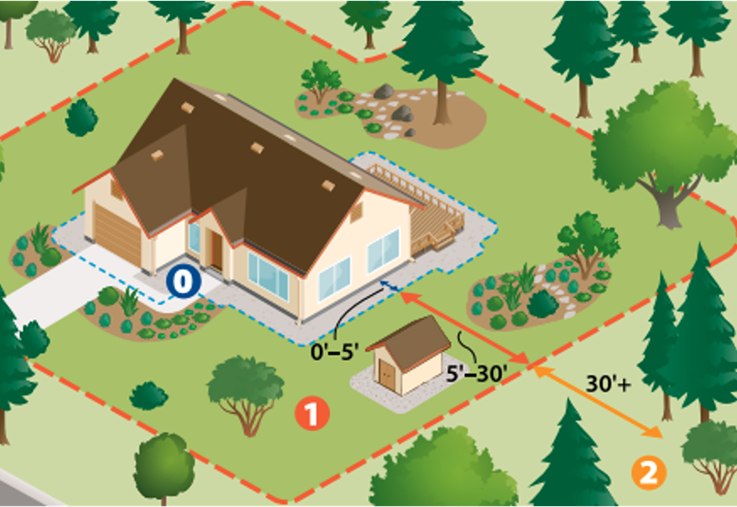
What California’s New “Zone Zero” Rule Means for Homeowners
If you own property in a California fire hazard zone, there’s a new rule you’ll want to know about: Zone Zero. On August 19, 2026, the California Board of Forestry and Fire Protection approved the final draft of the state’s first statewide defensible space standard focused specifically on the five feet immediately surrounding a home.
What is Zone Zero?
Zone Zero is the area within 0–5 feet of a home or other structure — including attached decks and stairs. Unlike the existing defensible space rules (Zones 1 and 2, covering 5 to 100 feet out), Zone Zero targets the building perimeter itself. The reasoning is simple: research shows wind-blown embers, not direct flames, cause most home ignitions during wildfires, and this five-foot ring is where embers are most likely to land and catch.
The rule traces back to Assembly Bill 3074 (2020) and was strengthened by SB 504 (2024), with the rulemaking accelerated after the catastrophic January 2025 Los Angeles County fires.
Who it applies to
Zone Zero applies to structures in State Responsibility Areas and Very High Fire Hazard Severity Zones within Local Responsibility Areas. In practice, that covers a lot of hillside and wildland-adjacent communities across the state, including well-known Southern California hot spots.
Where things stand right now
A few important timing details:
- The final draft was approved 8–0 by the Board of Forestry on August 19, 2026 — but it is not yet law. It still needs to go through Office of Administrative Law (OAL) review before a statewide effective date is set.
- New construction is already ahead of the curve — in some jurisdictions, like San Diego, Zone Zero has been required for new structures built in Very High Fire Severity Zones since February 28, 2026.
- Existing homeowners should aim to meet Zone Zero standards by February 2027, per current guidance.
- Regulators have signaled an emphasis on education and outreach over penalties in the near term, giving property owners time to comply before stricter enforcement begins.
What compliance generally looks like
While final enforcement details are still being worked out, the core requirement is removing combustible materials from that first five feet: dead vegetation, wood piles, mulch, combustible roofing debris, and stored flammable items like firewood. Non-combustible, well-maintained, drought-tolerant plantings are generally allowed within the zone — it’s about eliminating fuel, not eliminating landscaping entirely.
Why this matters beyond fire safety
This isn’t just a safety checklist item. It’s increasingly tied to real estate outcomes:
- Insurance eligibility — many carriers already factor defensible space compliance into underwriting, and non-compliant properties risk denied coverage or higher premiums.
- Marketability — compliant homes are becoming more attractive to buyers, while non-compliant properties in fire-prone areas may face a harder time selling.
- HOA and multi-family exposure — for HOA-managed communities, this adds a new, more maintenance-intensive layer of shared responsibility that boards are still figuring out how to allocate.
The bottom line
Zone Zero isn’t in effect statewide yet, but the direction is clear, and the timeline is close enough that waiting until it’s mandatory is a risky bet — especially with insurance underwriting already moving in this direction. If your property sits in a fire hazard severity zone, now’s a good time to look at what’s within five feet of your home and start planning, even ahead of a hard deadline.
This is general information, not a substitute for guidance from CAL FIRE, your local fire authority, or a licensed contractor. Requirements can vary by jurisdiction — check your local fire severity zone designation for specifics.
Jenni Pickard 619-277-1349 | jennipickardrealestate.com | leejenni22@hotmail.com
ERA Donahoe Realty | DRE #02029884
